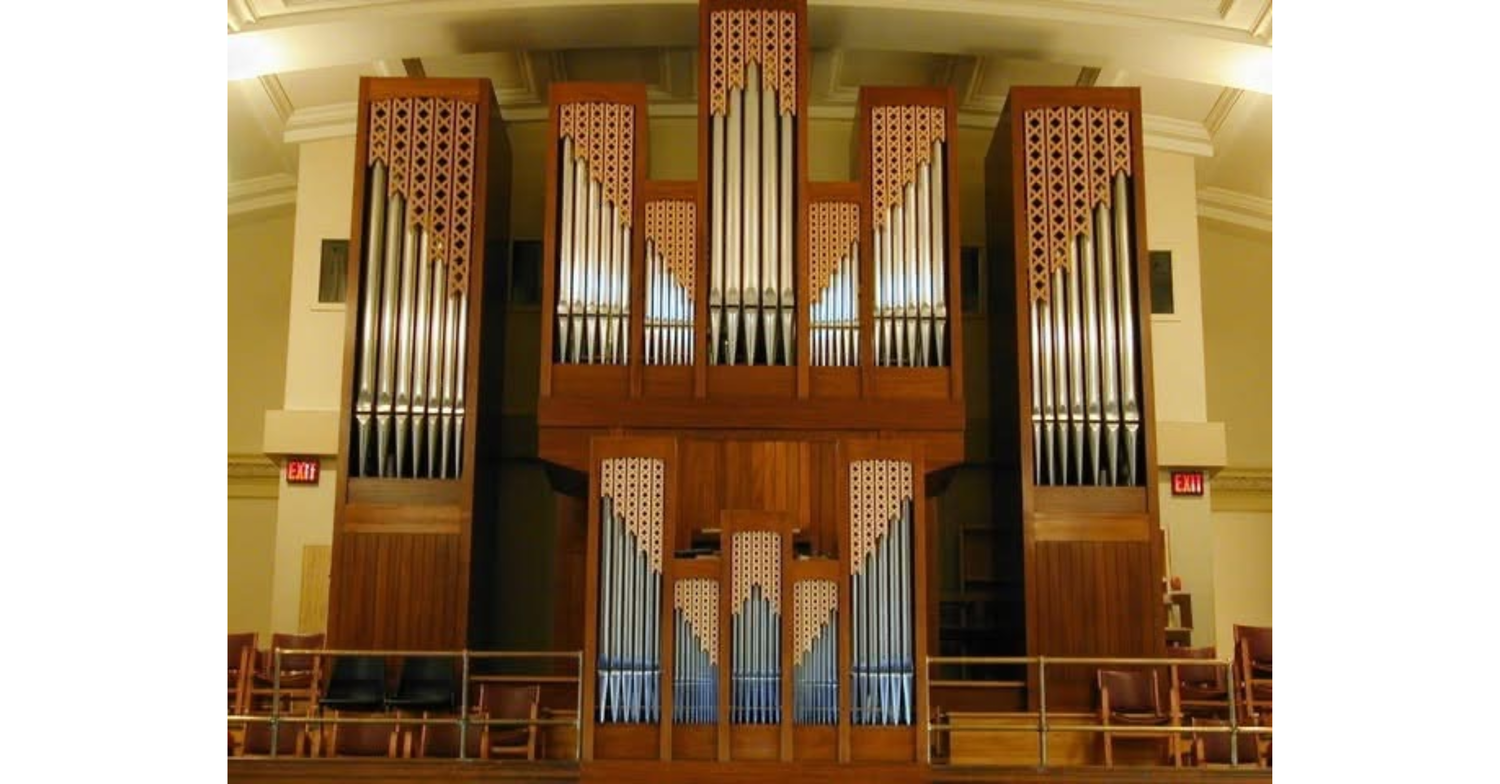
There is a deep concern in the community (organ, music, staff, alumni, and veterans) regarding the recently disclosed plan to remove the 1978 Casavant Memorial Organ from Convocation Hall at the University of Alberta. This instrument is not merely a fixture in the room; it is a significant cultural asset, a memorial, and a rare example of Canadian organ‑building history. Its removal would represent a profound and irreversible loss to the University of Alberta and to the broader artistic community.
The Casavant organ holds a unique place in Western Canada’s musical heritage. Designed during the tenure of Gerhard Brunzema as Casavant’s artistic director, it stands as the first and largest mechanical‑action organ of its kind in the region. Its value is not symbolic alone: it remains an active, high‑quality performance, teaching, and research instrument with a replacement cost estimated at approximately three million dollars. Few universities in North America possess an instrument of comparable significance.
We understand that accessibility improvements and increased seating capacity have been cited as reasons for its removal. These are important goals and while we fully support efforts to make Convocation Hall more inclusive and functional, such objectives need not be pursued at the expense of a major cultural asset. The desecration of the organ will remove all physical evidence of over 100 years’ history of organ music in Convocation Hall (from 1925).
The University of Alberta has long been recognized as a steward of the arts, a place where scholarship and cultural heritage are preserved, studied, and celebrated. Removing the Casavant organ would run counter to that legacy. It would diminish the university’s standing in the arts community and is terrible stewardship of an important resource entrusted to them.
This organ is a War Memorial. It was funded by donors, alumni and war veterans. To remove it would be deplorable. The University should honour the sacrifices which led to the Memorial Organ that graces Convocation Hall with beauty of architecture, sound and historic significance. They must respect the generations of university students, faculty and officials who chose to remember the fallen with a monument which offers cultural value, solace, majesty, courage and joy through its music. The University must be willing to consult, to compromise and to revise the revitalization plans with a decision to preserve the Memorial Organ. Otherwise, it will be lost forever. When the organ is dismantled, it may be stored for up to one year, but it will be very challenging to find another home with the required dimension for such a large, purpose-built instrument. What a shame it would be to break it up to fit another space or spaces, and unthinkable to imagine it in a landfill.
The organ will be celebrated in words and music by several organists, including Professor Emerita and University Organist Marnie Giesbrecht, many alumni and friends of the organ on Friday, April 24 at 5 pm in Convocation Hall on the U of A campus, Old Arts Building. There will be time for media interviews starting at 4:30pm, and several organists will be available for interviews. This may be the last time that this significant instrument is heard.
For interviews, recordings or more details:
Tammy-Jo Mortensen, M. Mus.
tj@bridgecanada.com, 780-722-4238

-
Synod Office
Office Hours
Contact